In my marketing & communication roles, I’ve come to know the value of well-produced and well-designed digital materials, including slides and videos.
One of my passions is designing Universally accessible online content and courses.
Students today come from diverse backgrounds with a multiplicity of learning gaps. It is my hope to continue to work and develop effective course tools and content on course management software that is accessible, fun, and engaging, and draws on my marketing and communications experience.
In part my vision for engaging online course design and content comes from the work I was able to do during the Arts Amplifier “Amplify Your Project or Service” training series. During this entrepreneurial workshop, I developed the idea for a YouTube Open Educational Resource called “Your Friendly Neighbourhood Professor.”
Here’s a bit from my final presentation:
You may have heard the expression “Mind the GAP.” It’s a warning, a suggestion that there’s a tripping hazard and you need to watch where you walk. It implies that there is a space up ahead that might cause you to faulter. When I think of first year university students struggling with classes, I think “mind the gap.” I believe that the learning-skills students have been taught in high school, compared to the skills that are required at university, have a big gap.
Students attending universities these days come from diverse backgrounds. They are first generation students, some are adult learners with kids, some have English as their third language, and some can barely afford tuition let alone textbooks. Which means that there isn’t just one gap but an assortment of them, and this is especially true if those students come from a family that has never had someone in university to tell them the ins and outs, that it’s not all about the mark, but what you learn.
As they learn more about the infinite wealth of knowledge available to them, at the post-secondary level, they also start to realize that there’s a lot of things they didn’t know they should have known. That’s the gap and they didn’t even know it was there. It’s a steep learning curve and shock when they realize all the things they don’t know they didn’t know.
And this “knowledge gap” means: For students, frustration that can lead to anxiety about their GPA, declines in mental health and wellbeing, and even dropping out because they feel they “aren’t cut out for university.”
While for professors and instructors, it can mean stress about lesson planning and poor evaluations. In a system where students hear over and over again “it’s the marks that count,” they can feel as helpless as their instructors and professors when it comes to knowing how to catch up or how to fill in their knowledge gaps. It’s a catch-22.
Until they receive that C- when they were expecting a B+, or when they read their feedback and still don’t understand what “awkward” means, students can feel defeated before they’ve even really been given a chance to succeed in learning.
Well, what if there were an initiative that instructors could recommend to help connect students with the resources they needed to fill in their knowledge gaps?
A youtube playlist that students could put on in the background as they are working. Allowing them to pause and review ideas that catch their attention, or search through a catalogue according to theme and keywords, so students can begin to learn how to mind their knowledge gap. What if they could search, specific terms like “awkward” and find a two minute video, explaining its possible meanings, as though they had a chance to sit down with their professor and ask that intimidating question?
What if these videos were presented by a variety of quirky characters that show critical thinking and seeking knowledge isn’t just for elite scholars and academics, these critical skills are for every-day people? And what if we gave students the opportunity to choose their own adventure when it comes to filling in the gaps they discover their first year of university that will set them up for success in the rest of their degree, for when they graduate and go out into the world?
An open-educational, multi-disciplinary platform for students and faculty to access that provides snippet videos on focused topics for students to fill in their learning gaps. From comma splices, to studying for in-class essays, to developing an argument, these videos will focus on the skills embedded in critical reading, writing, and researching—the most valuable skills we want our students to know by the time they finish their first year of university but never quite have enough time to cover in any real depth.
But, not only that, “Your Friendly Neighbourhood Professor” curates resources from other websites in order to create a community of free, openly accessible, reputable sources that takes the guess work out of vetting “stuff on the internet” for both professors and students.
“Your Friendly Neighbourhood Professor” gives you the assurance that you’ll be able to recommend quality snippets of information on a platform students love, in a format that catches their attention. And, I’m hoping, that the next time a student walks into your office needing help or advice, and you’re over-whelmed by a sense that there’s too much of a gap to mind, that you won’t falter because you’ll be able to recommend “Your Friendly Neighbourhood Professor.”
Canadian Literature
As the marketing & communication coordinator at Canadian Literature, I was originally hired to assist with various aspects of the journal’s social media and advertising strategies. I started my position remotely, working with several applications, to improve CanLit‘s social media presence and outreach.
After that, my work at CanLit expanded to include change management–working closely with our in-house team to update the look and feel of our print journal, as well as improving our production workflow.
While I’m familiar with using Social Sprout, Asana, and Slack for social media and project management, CanLit‘s small close-knit team scheduled posts using individual programs while managing data through FileMakerPro and Open Journal Systems.
The Vancouver International Film Festival
Through UBC’s PhD Co-op program, I was hired in the Vancouver International Film Festival’s Creative Engagements department as the Digital Communications Assistant.
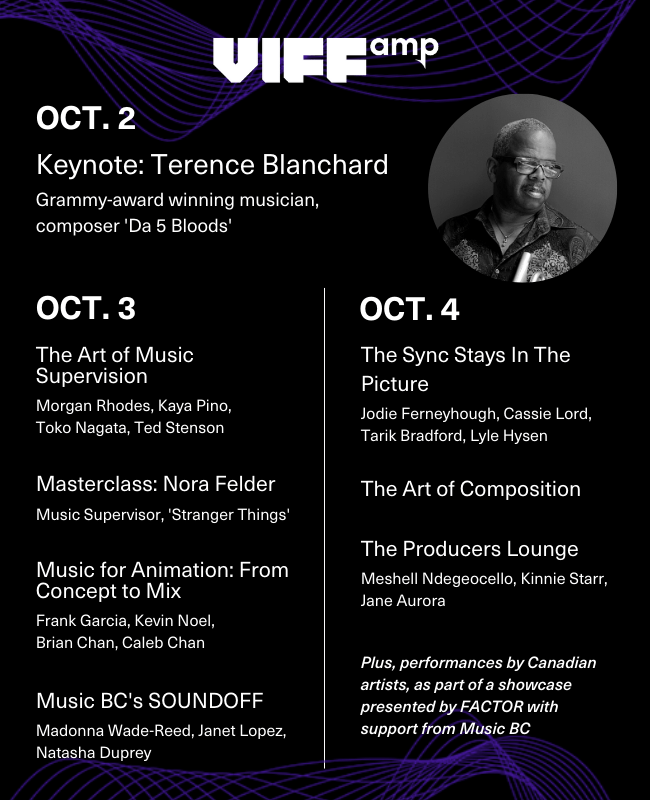
Building on my experience working in the UBC Programming office for Congress of the Humanities and Social Sciences 2019, I assisted the Marketing & Communications Manager with implement and coordinating programming, for the 2020 Vancouver International Film Festival, including VIFF AMP/LABS/IMMERSED programming and Creator Talks.
During my time at VIFF, I had the opportunity to work with leading industry creators in Independent Film and coordinate a cohort of up-and-coming creators for the AMP Talent Accelerator.
Some of my on the job tasks included outreach and promotion, updating and expanding community outreach, as well as proof-reading and editing documents, communications, and website content.
Some deliverables at my time with VIFF include:
Resolved 14,000+ emails from the AMP registration blast
Sept. 1 to October 9, responded to 2865 emails sent to Creative Engagement mailbox
Increased AMP Outreach from 160 to 262, with 65 confirmed community partnerships, establishing new contacts in Alberta, Saskatchewan, Washington, and LA
Promoted and helped to facilitate online Creative Engagement programming, including 11 Creator Talks & Masterclasses, 6 LABS, 4 Totally Indie Day Talks, and 12 AMP events, including coordinating mentorship sessions
Coordinated 60+ Talent Accelerator participants, including answering questions and addressing concerns
Invited and coordinated 80+ potential LAB attendees
Established contact list for Talks, identifying 80+ communities potentially interested in attending and sharing events
Researched and established “North of VIFF” Outreach list consisting of 128 theatres and community cinema venues across BC, influential in VIFF 2020 Open Gala outreach
Drafted and scheduled 70+ Social Media posts on SocialSprout to promote Creative Engagement programming from June through to October
Created Reddit posts to promote AMP Talent Accelerator & Music in Film Summit, as well as Immersed, with 40+ direct interactions
Posted AMP Music in Film Summit to 41 online community calendars across Western Canada
UBC Programming
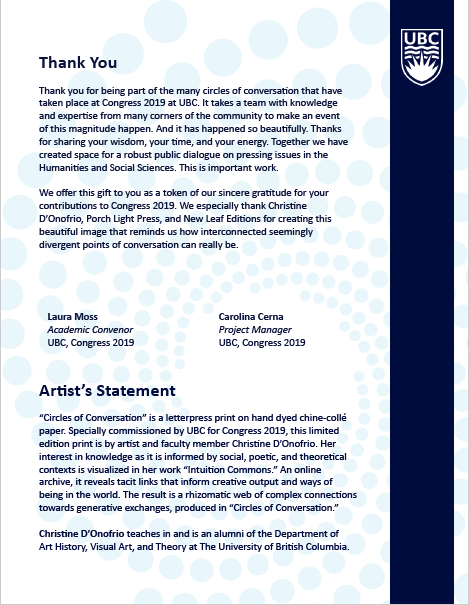
Congress of the Humanities and Social Sciences 2019, hosted at the University of British Columbia, is the most successful congress of conferences in Canada to date.
UBC’s Vancouver Campus hosted over 10,600 scholars during June 1 – 6, 2019, with over 150 events coordinated through the UBC Programming office, where I was the lead administrator.
As the Program Assistant and Coordinator, I worked closely with the Academic Convenor Dr. Laura Moss to implement successful programming. During this time, I coordinated a team of over 50 subvention leads. I also ran the UBC logistics for our flagship events, consisting of the Opening and Presidents’ Receptions, as well as the Big Thinking lecture series where we hosted iconic public intellectuals, including David Suzuki and Esi Edugyan.
Is this your new site? Log in to activate admin features and dismiss this message


 S. D. Engbrecht