sharon d. engbrecht
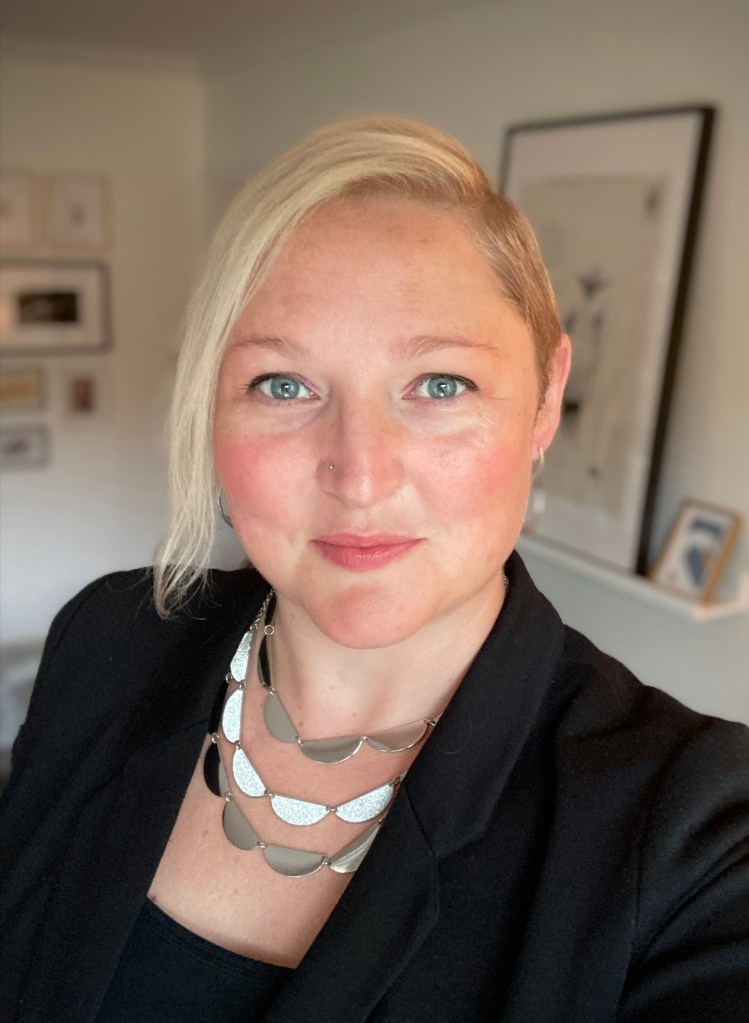
Hi, I’m Sharon D. Engbrecht (Eng-breh-kt). I use they/them pronouns and sometimes go by Syd.
I was born and raised on the prairie lands known as western Canada. I’ve seen much of this beautiful land and the diverse cultures that call Canada home, from Nova Scotia to Vancouver Island. Currently, I find myself in Guelph, Ontario as a postdoctoral researcher at the International Institute for Critical Studies in Improvisation.
In the spring of 2025, I completed my PhD in English Literature at the University of British Columbia. Working in narrative theory and feminist thought, I looked at a genre of writing that has at its core a critique of romance, what I termed critical-romance narratives. The novels in my dissertation represented a variety of canonical genres, from feminist writing to kitchen sink realism, dystopia, historical fiction, and experimental prose; but they were all united by an underlying skepticism towards inherited identities of femininity, womanhood, and what the experience of being “female” means as those experiences are so often aligned with romance and love.
My focus in this research has shifted slightly to become my current book project. While I still explore how women use fiction to critique socio-cultural narratives of romance, my attention has turned towards the idea that everyone has a story of romance and how these stories motivate presentations and inhabitances of gender and sexuality.
My other scholarship includes a forthcoming article on “difficulty” in the post-secondary educational setting in “Encountering the ‘Difficult’ Text: Teaching Nalo Hopkinson’s ‘Inselberg’” (Studies in Canadian Literature) and theorizing what it means to glory in the ugly in “The Gloriously Ugly in Marian Engel’s No Clouds of Glory (Sarah Bastard’s Notebook)” (Canadian Literature).
My most recent article submission looks at the “not until…” consensual intimacies in kink and BDSM cultures to explore how gender emerges re-imagined not as a kind of social coherence but as a radical connection to the self and to ways of dwelling through unknowing in the world.
I come to academia as a first-generation learner, figuring things out the hard way through trial and error. But the horizon of hope in the utopian vision of higher-education constantly renews my faith in what it means to produce and advance knowledge–that the university is, fundamentally, a space of progress and positive social change.
As a queer, disabled individual, I experience this utopian possibility everyday, in being able to express myself as nonbinary and neurodivergent with a varying degree of need for my handy mobility device (my cane named Hector). #DifferentAidsForDifferentDays
Still, much work needs to be done to recognize what it means to be visibly and invisibly disabled, and to combat implicit bias especially in spaces of intellectual knowledge production. There are times, even, when I struggle with my own intrenched ableism and ideas about how I should be, look, and act. But exploring the neuroqueer alongside feminist philosophy and critical race theory draws me towards different perspectives and the situatedness of experience, which I inhabit as an intersection of privilege and disadvantage. In claiming the space of queerness and disability, I recognize that my inheritance as an English-speaking, white-settler in Canada allows me to move through certain spaces without prejudice and discrimination; the same spaces that, for many years, excluded BIPOC, disabled, and 2SLGBTQIA+ folks. At times, I can pass as cis-gendered, heterosexual, and able-bodied. But the ability to “pass” brings with it a different kind of psychological detriment, in feeling out-of-sorts and uncomfortable in one’s own very being that resonates with many who have experienced varying degrees of discrimination and social alienation for any number of reasons.
I bring these concerns about identity and belonging with me into the classroom as a scholar-teacher and activist-researcher. My desire for the future is that accessibility and diversity are so common we don’t fret over them or dismiss them–that every learner has the opportunity to learn in a way that makes the most sense to them, in an environment that does away with systemic barriers and injustices. Knowledge is one of the most valuable things we can own.
When I’m not researching and writing, you might find me making some kind of art or watching a film. I’m an artist at heart, and I love painting, drawing, and photography.
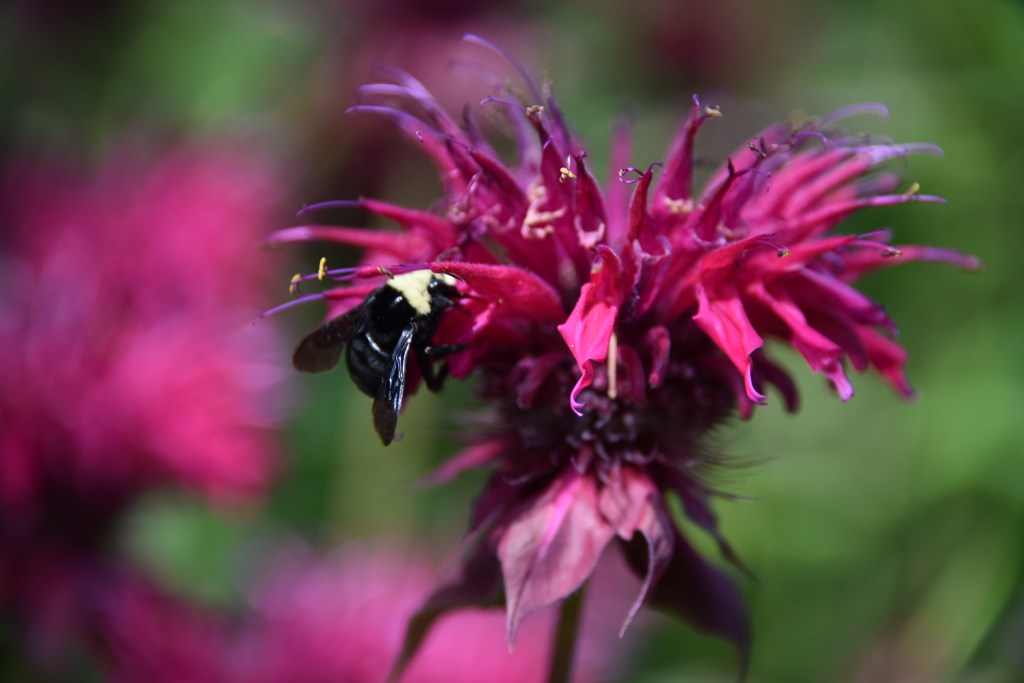
You might also find me fixing up my old truck, exploring the city or countryside, riding my motorcycle with my daughter, swimming, camping, hiking the summer trails, or frequenting the snowy slopes with my trusty snowboard!
Note on socials: while I’ve done social media and content management in the past, currently my only public profiles are on Instagram and LinkedIn. For mental health reasons at this moment, my public engage on social media platforms is limited. ❤️
 S. D. Engbrecht